John Ansor and Thecla Bradshaw, "A Cree Life: The Art of Allen Sapp", Vancouver, 1977, page 27
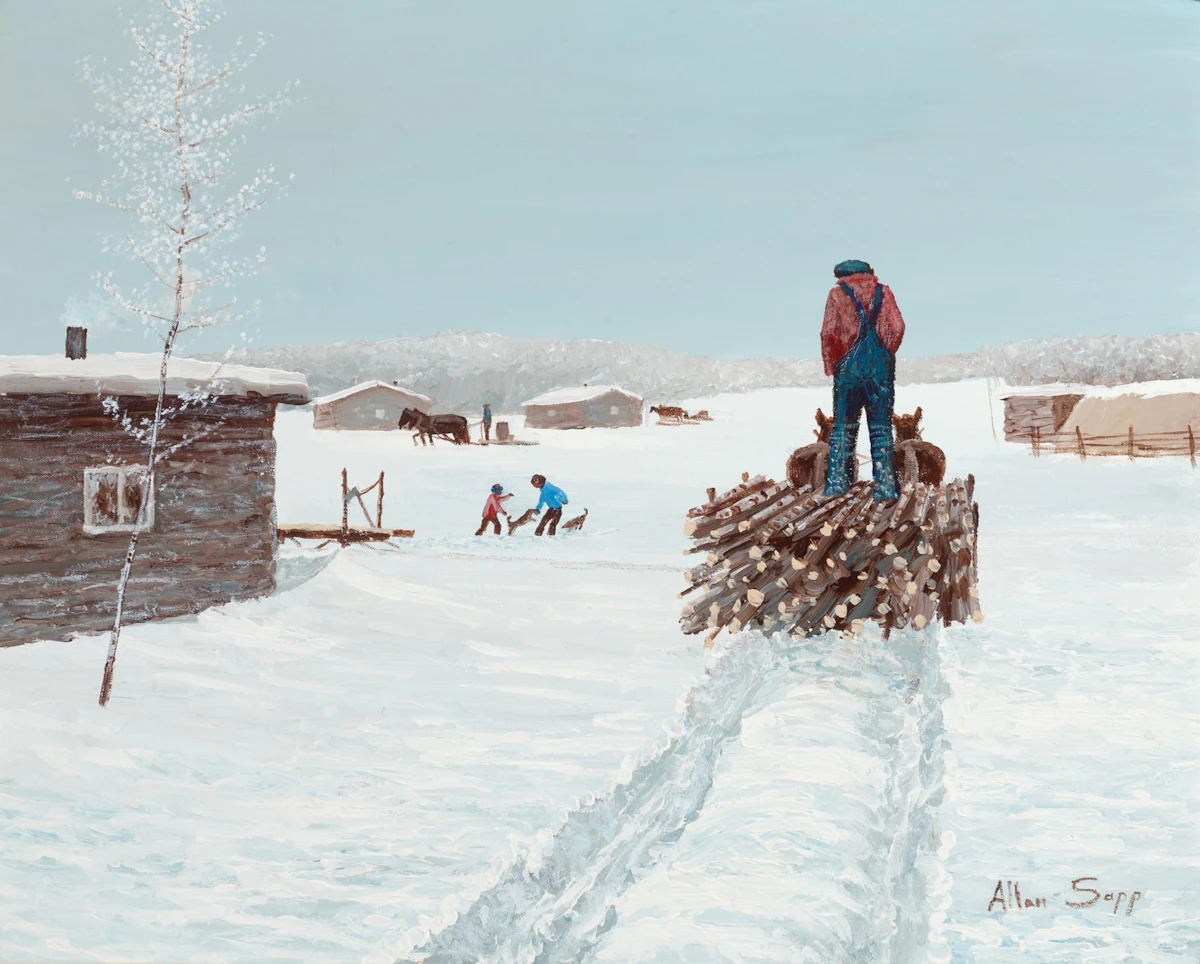
Allen Sapp’s depictions of his memories growing up on the Red Pheasant First Nation close to Battleford, Saskatchewan, reveal an honesty and tenderness. We can imagine as the viewer that we are Sapp, watching his father stand atop a sleigh of logs, leaving tracks in the fresh snow as he is pulled to join the other sleighs in the distance. Further into the scene, under a grey winter sky, two children are playing with dogs, surrounded by the small houses of their village.
Sapp focused on the life of Cree people on the reserve in the 1930s and 1940s and often depicted his own family members. Alex Sapp, the artist’s father, was formerly Alex Saposkum, meaning “He-passes-through”, but due to societal pressures, the decision was made to anglicize the family name to Sapp. Here Alex embodies this name, as he passes through the scene, working hard to support the young artist and his six siblings; of which only Allen Sapp and two others would survive to adulthood. Given the name Kiskayetum, meaning “He-perceives-it,” Allen Sapp was committed to drawing as early as the age of eight. Sapp’s father has reflected fondly on his son's interest, saying:
“Sometimes he would do little drawings, drawing all sorts. And my children, those others, did not do that, only him. Kiskayetum was watching us, listening, fixing little things with his hands, drawing pictures on wrapping paper.”
Encouraged by his father to embrace his Cree identity, Allen Sapp kept his ancestral heritage alive within himself by bringing it to life for others through his paintings.