Total Works Sold
0
Current & Upcoming Works
1
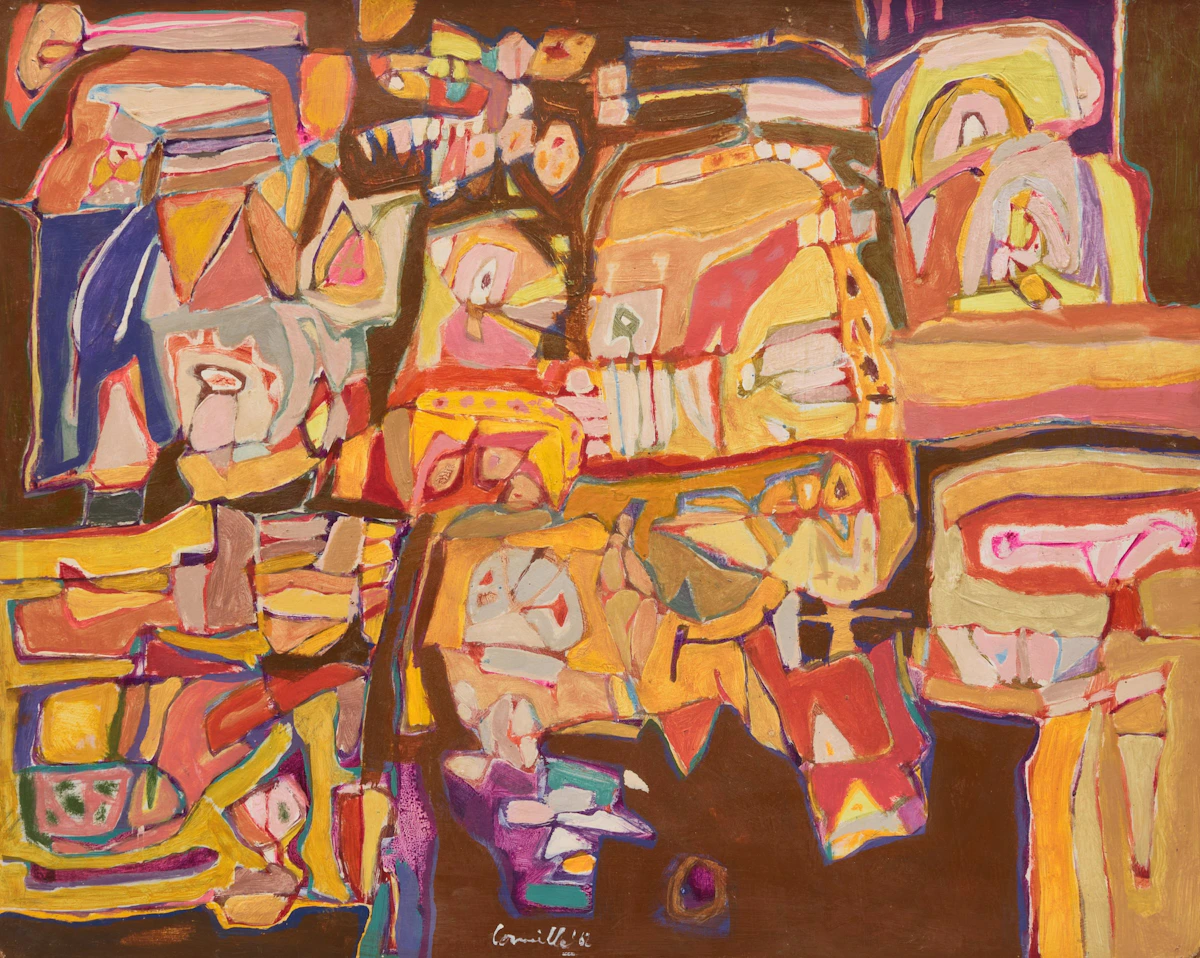
Spontaneous and colourful, Corneille’s paintings bridged the gap between figuration and abstraction and set a precedent for individuality and the interplay between the personal and the universal in art. Corneille was a painter, draftsman, ceramicist, writer, and graphic artist. He was born in 1922 in Belgium as Guillaume Corenelis Beverloo to Dutch parents. He co-founded the avant-garde, post-war European art movement CoBrA, active between 1949 and 1952. The artists in this group drew inspiration from Surrealism. They sought to create a universal form of art that anyone could make, regardless of rank or status, based solely on the natural urge for self-expression. Corneille is considered one of the most significant modern graphic artists of the 20th century and has been described as having developed a new poetic art through painting.
Corneille founded the Dutch Experimental Group Reflex in 1948 with his close friend Karel Appel (Dutch, 1921–2006). This group was later absorbed into the CoBrA movement. Corneille studied at the Academy of Fine Arts in Amsterdam but was mostly self-taught. He created vibrant, expressionistic images in paint, gouache, and drawing. Corneille mostly painted landscapes until the 1960s, when his work became more figurative. He was deeply influenced by his time in Africa, where he studied local art and collected masks that he later used as themes for his work. This artist radicalized the Dutch art world in the early 1950s, making modern art more acceptable. His main influences were Pablo Picasso and Paul Klee, but he said he was most profoundly moved by and connected to Vincent van Gogh, since they shared a love of form, nature, and colour. After he died in Paris, Corneille was buried in a plot near van Gogh's grave in the Auvers-sur-Oise cemetery in France.
