Maria Tippett, “Emily Carr: A Biography”, New York, 1982, pages 167 and 176
Emily Carr, “The Emily Carr Collection: Four Complete and Unabridged Canadian Classics”, Toronto, published posthumously, 2002, pages 17, 27 and 34
Russell J. Harper, “Painting in Canada: A History”, Toronto, 1977, pages 307-08
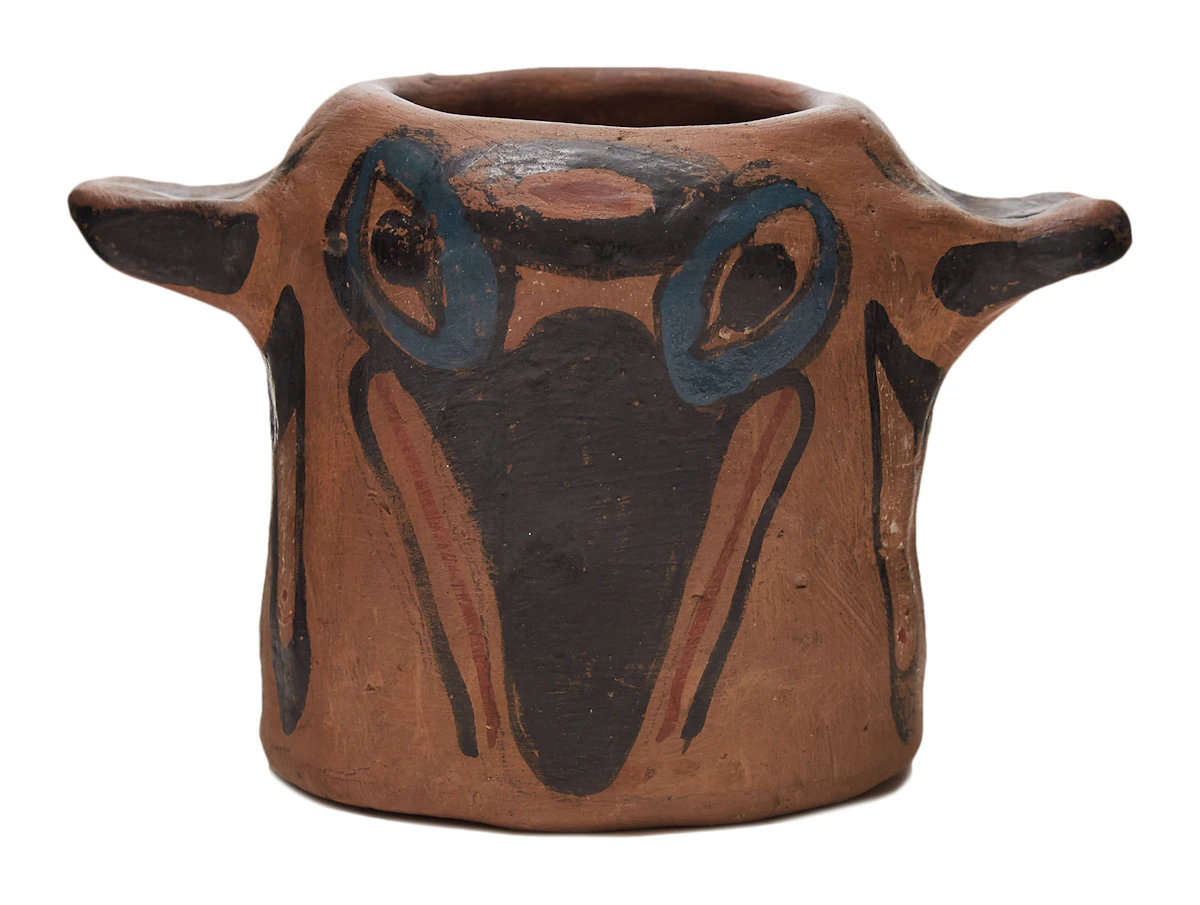
Emily Carr created unique ceramics inspired by her time on a Ucluelet First Nation reserve in British Columbia on the west coast of Vancouver Island, home to the Nuu-chah-nulth people, then commonly known to English-speaking people as ‘Nootka’. As a young person, Carr was embraced by the community where she was given her Native name, “Klee Wyck,” which loosely translates as “Laughing One.”
The scale of the ceramic pot coupled with its hand-thrown nature evokes an intimacy and loving empathy with the materials Carr had, mirroring her deep connection with the people of Ucluelet. When Carr eventually became bedridden by old age and recurring illness she undertook writing as a second creative outlet, evocatively recounting her memories on the reserve in her self-titled autobiography, “Klee Wyck”. The small scale, reduction of design to minimalist aesthetics and colour palette of black, white and red, are a nod to Carr’s exposure to the people of Ucluelet’s traditions and their influence on her own artistic expression.