Pierre Restany, Sorel Etrog, Munich, 2002, page 77
Florian Rodari, “Secret Paths, 1999-2000” in Ihor Holubizky (ed.), Sorel Etrog: Five Decades, Art Gallery of Ontario, Toronto, page 103
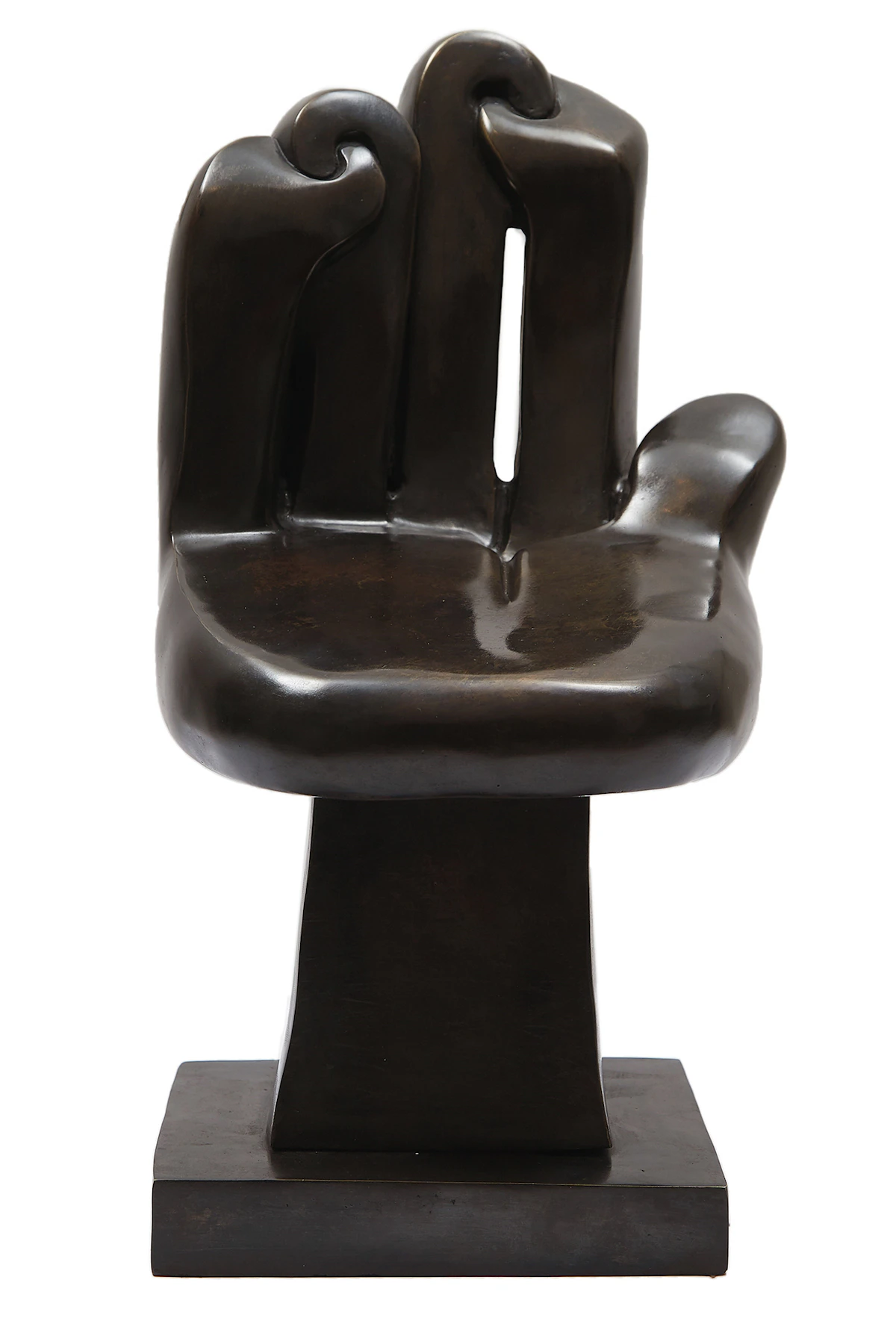
One of the most recognizable recurring themes in Sorel Etrog’s work, the Links series’ “hands” encapsulate the artist’s exploration of bodily form in contemporary sculptural practices of the Post-War era. Throughout the Links period of Etrog’s work, the preoccupation of linking different parts of the body seamlessly was paramount. Deeply influenced by ancient carving and sculpture techniques, Etrog notes: “I was lucky to have discovered the Etruscan links which showed me how to join the multiple shapes organically. The Link created a tension at the point where they joined, where they pulled together or pulled apart.” Etrog was developing a new visual language of the body, wrapped in internal and external tensions with the use of the linking of body parts. There is a psychological element at play in these works, an inherent tension trying to break free from the bodily constraints seeking freedom.
On the importance of these link elements, Florian Rodari writes: “Inasmuch as they are points of maximum energy, these nerve centres where the body hinges and joins do their work are by nature painful; they are nodes of increased vulnerability.” “Small Chair (Hand)” exemplifies the human condition Etrog was exploring throughout his body of work and the inherent tensions within the forms. The hand becomes a chair, an object to cradle and hold a sitter. The tension in the links with the comforting quality of the chair creates a complex emotive experience, whereby the object is at once vulnerable and tense while still managing to offer comfort to another.