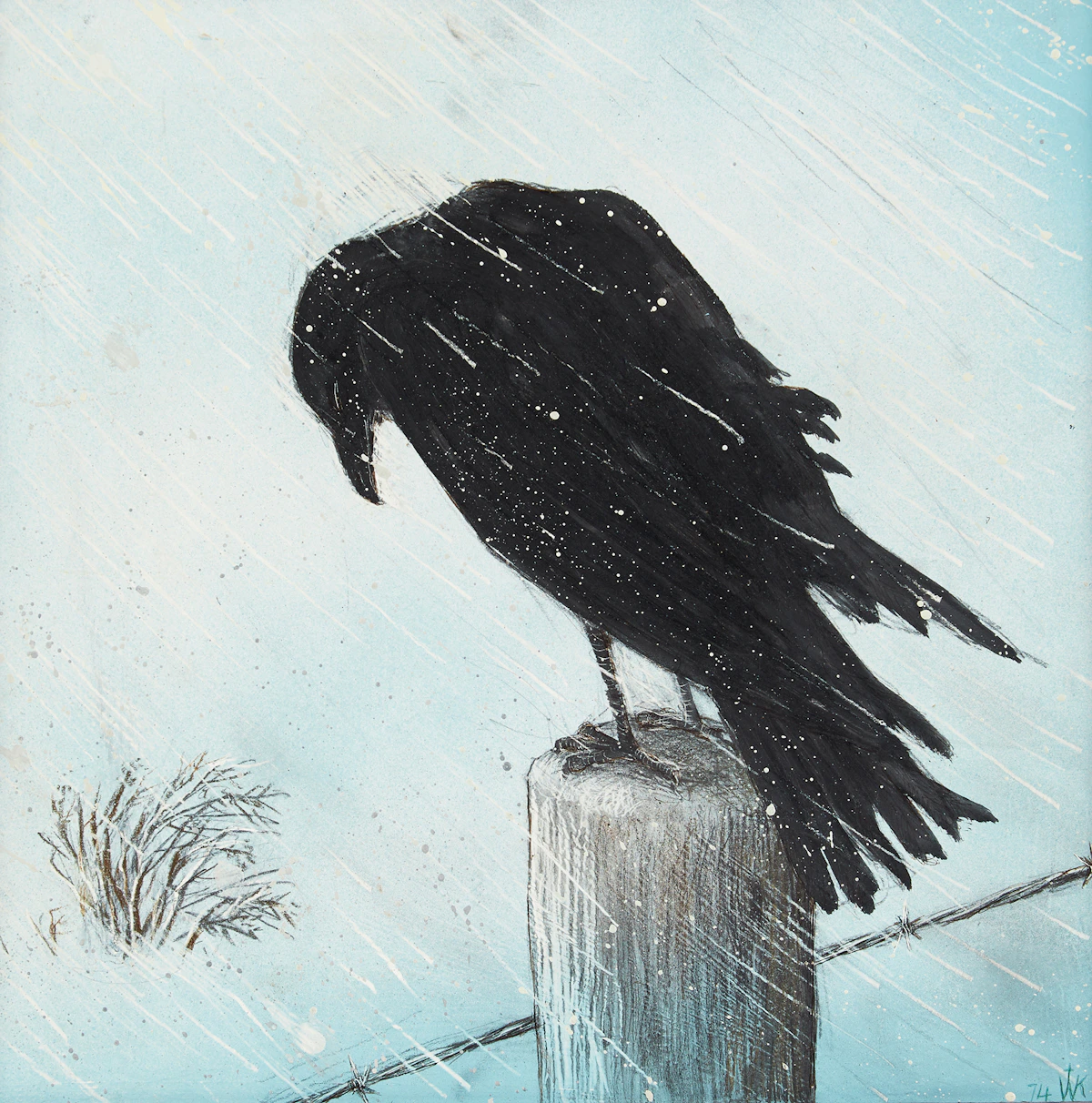
signed and dated 1974 lower right; titled on the reverse
12.25 × 12.25 in (31.1 × 31.1 cm)
Auction Estimate:$10,000 - $15,000
Sale date:November 23, 2017
Price Realized
$29,900
(including Buyer's Premium)
Literature
William Kurelek, A Prairie Boy's Winter, Montreal, 1973, unpaginated
For Kurelek, the traditions and local narratives of growing up on the prairies heavily influenced both his personal development and artistic expression. Writing and illustrating “A Prairie Boy's Winter”, Kurelek tells the story of his experience with his siblings growing up in the prairie winter. He devotes a section on the return of the first crow as the tell-tale sign of spring and writes:
“Melting snow and ice were proof that winter was over, but William really dated spring from an event that occurred a month earlier. It is said that the robin is the first sign of spring. But on the prairies many say it's the prairie horned lark, a small cousin of the meadow lark, that heralds spring. At the very first thaw, these larks can be seen, sometimes in twos and threes, standing beside puddles in the field. For William, however, there was something special about the crow—perhaps because of its very noisy, very noticeable departure at the beginning of winter—that made its return spell 'spring' for him. Maybe too it was because the crow is a large bird, and black, so it stood out against the snow... Crows came back singly, or in pairs, about the end of March. It was then that were sighted by the children on their way to or from school. The lucky first-sighters threw up their hands, and even their caps, in exultation, chanting, 'I saw it! I saw it! I saw the first crow! Spring's here!'”
Unfortunately, for this particular crow, he has arrived too early for spring and is caught in a snow storm, perched alone on the fence post, to brave the cold and wind of the unforgiving prairie winter.