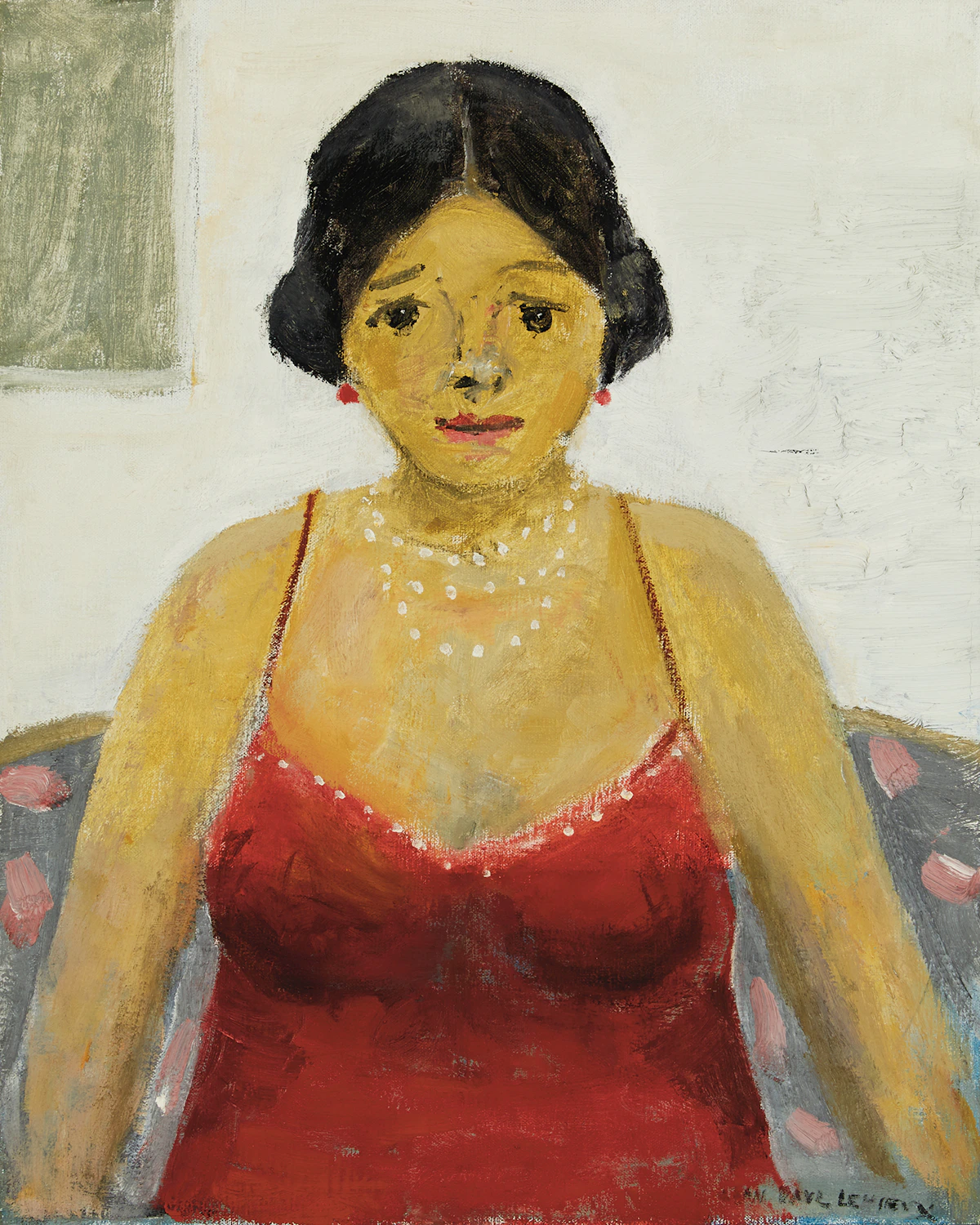
Guy Robert, Lemieux, Toronto, 1978, pages 209 and 244
Portraits occupy a strong presence in Jean Paul Lemieux’s multi-faceted body of work. Throughout his career he depicted his sitters in a frontal stance with a direct view into the facial expression. Guy Robert, on the the subject of the artist’s portraits, writes that “Lemieux believes that the face has a message to impart all through life, and a good deal of his work has been concerned with capturing the characteristic expressions of different stages of life from cradle to the deathbed.”
Inspiration for documenting the human expression came from an interest in American Social Realism in his early career, particularly the movement’s interest in showcasing the daily lives of working class people. Later in life, Lemieux’s portraits were influenced by Edvard Munch and the Expressionist school of painting, as they seek to portray anxiety and the artist’s “dark, tragic vision of the tormented historical era he was living through.”
“Dame au collier de perles” illustrates Lemieux’s ability to highlight human emotion and facial expression. The sitter’s powerful stare directly at the viewer exudes anxiousness and vulnerability; it is contrasted, however, with an ornate three-strand pearl necklace and glamorous red dress. A woman wearing a necklace became a recurring motif in the artist’s portraits, referencing a popular theme in Western painting: feminine vanity. Robert explains that for Lemieux, the symbol of the necklace goes beyond a statement on vanity, writing that “in Lemieux’s painting, the vanity of woman is no longer a simple matter of make-up or gaudy jewelry. It becomes a refusal to submit to the ravages of time, an exorcism of the aging process and even the proclamation of a quality of being - a singular way to announce one’s person, beautifully and almost poetically.”