Joseph Plaskett, A Speaking Likeness, Toronto, 1999, pages 181-3 and 252-3
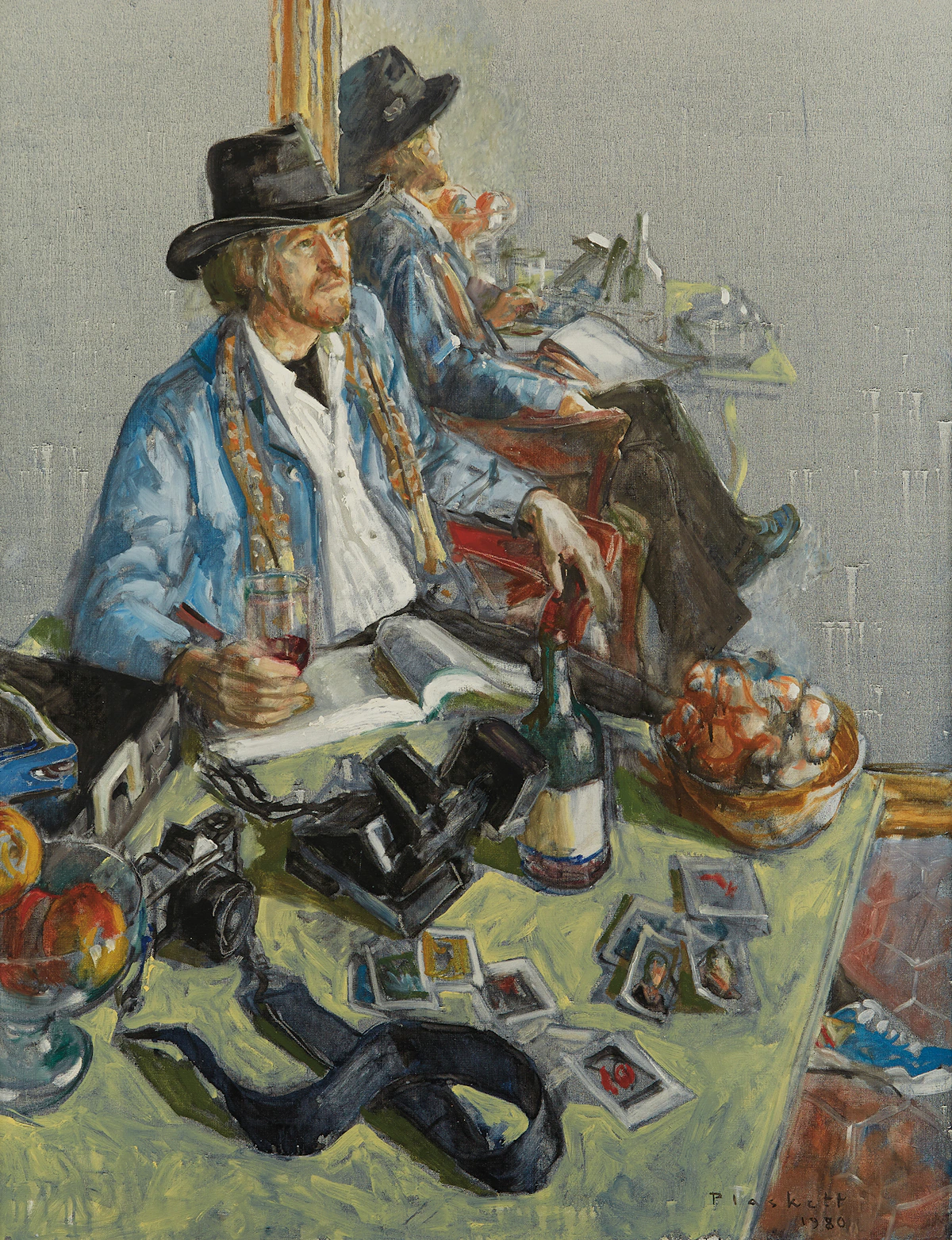
An interesting example of the artists work, “Polar Coordinates” portrays Plaskett's fellow artist and friend Iain Baxter in a seated repose in front of a mirror. The two had met while being represented at the New Design Gallery in Vancouver during the late 1950s. Arranged as a classical still life with strewn fruits, Polaroids and objects of the everyday, each component of the painting is given equal weight of importance by the artist. As the sitter gazes away from the viewer, he is not the central focus of the work, necessarily, commanding attention away from the surrounding elements of the work. Rather, Plaskett has blended Baxter into the environment he inhabits, transforming the traditional role of the sitter as the central singularly important subject of the composition to an equal player in his environment.
Importantly, Plaskett's love and fascination of mirror's plays a role in this work. The artists explains: “The mirror world, unlike the sensible world facing it cannot be touched. It is an etherial place- no sound, no taste, smell or texture...There is no mind behind this glass artifact except that of the viewer, whose face tells little more about himself than he already knows.” Similar to how the artist deconstructs the mythological intrinsic greatness of a sitter for a portrait, the mirror's use as an artistic mechanism echoes this sentiment. Rather than portray reality, the mirror is in fact a facsimile of reality; an illusion of the space and time it reflects. Plaskett continues, explaining the process behind his portrait works: “I am not actually a portrait artist per se. As my interest is less in making a portrait than a painting, I do not seek out portrait commissions where it is difficult to indulge whims and desires or follow the logic of painterly impulse. This is why I prefer portraying friends, or myself, where every impulse may have free rein.”