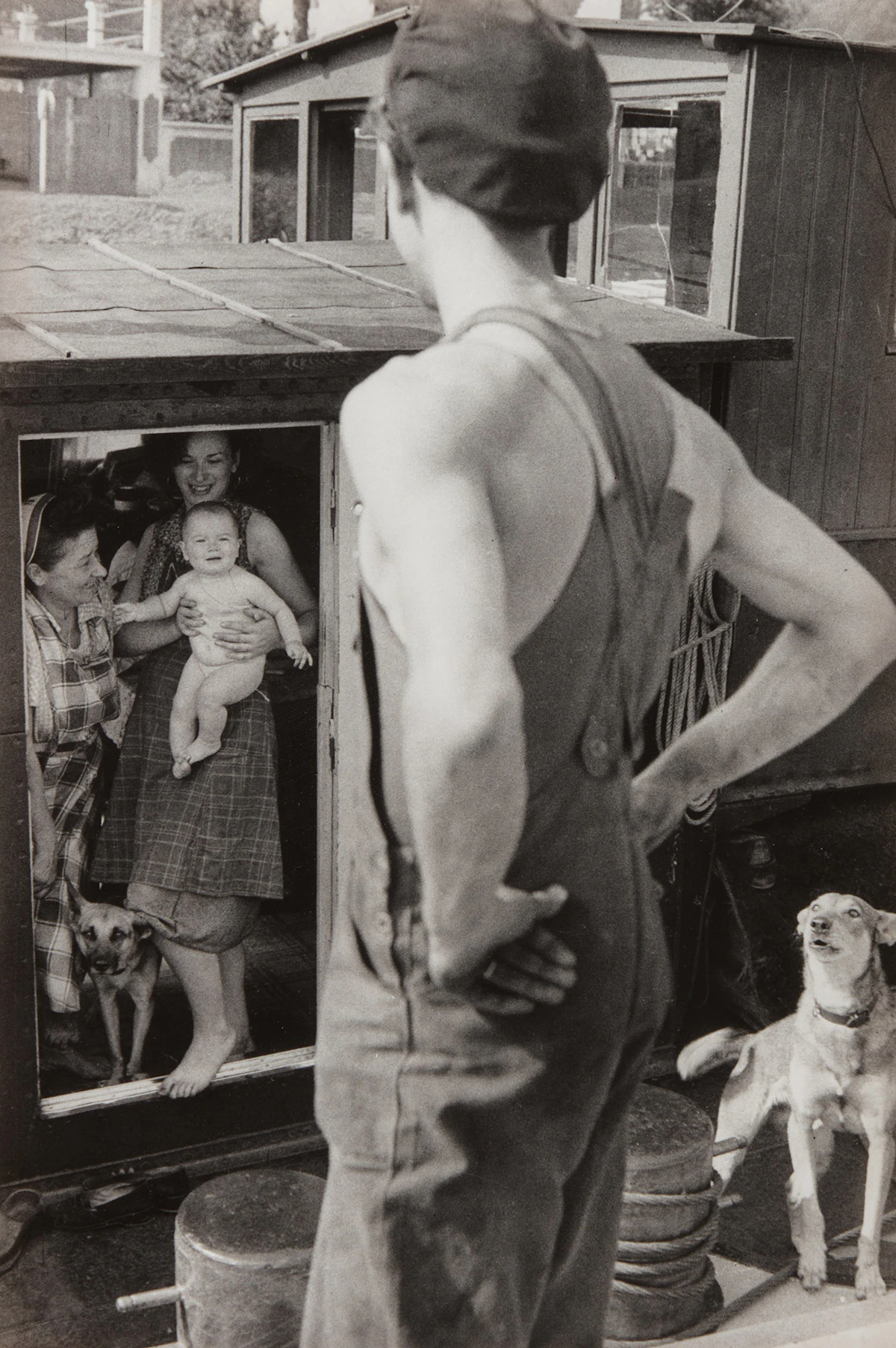
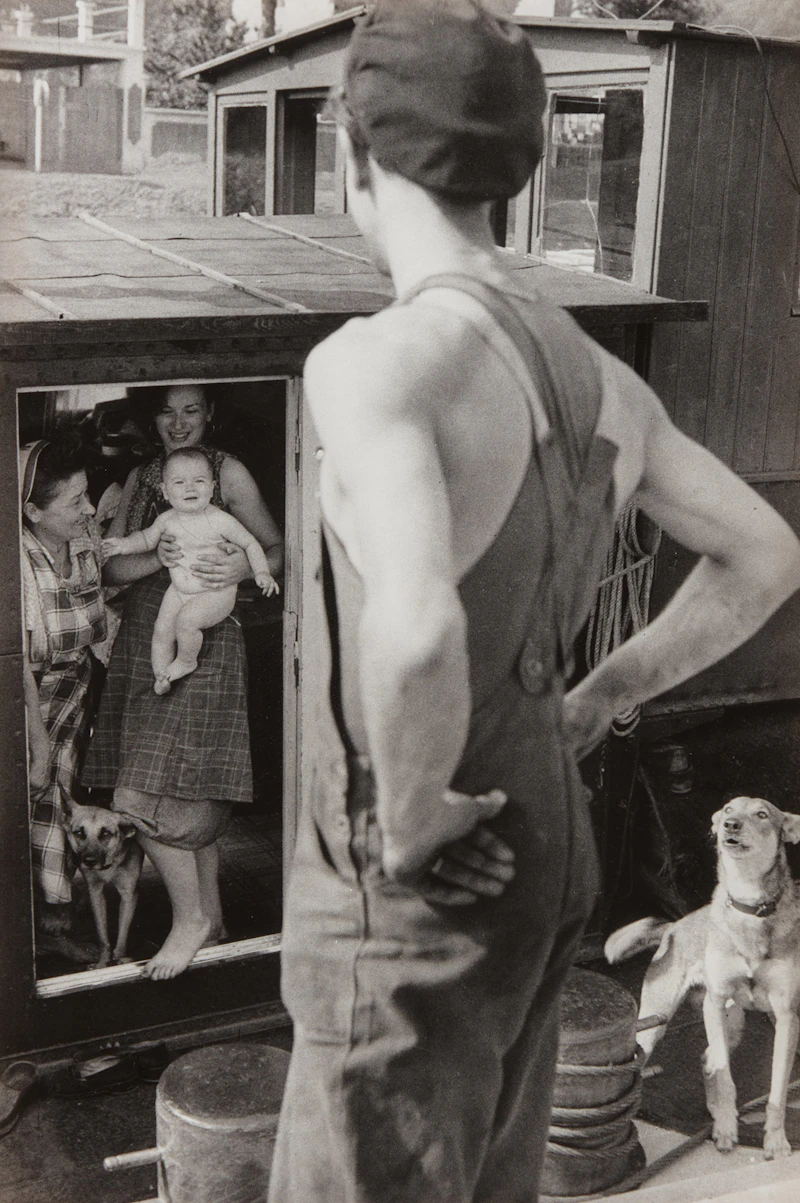
Henri Cartier-Bresson was a pioneering French photographer known for his humanist approach to candid photography, capturing fleeting moments with an unmatched sense of spontaneity. Often regarded as the father of street photography, he mastered using 35mm film and is famous for his "decisive moment" — the idea that the perfect photo exists in a split second. Cartier-Bresson was a founding member of Magnum Photos, an international photographic cooperative established in 1947, which became a platform for independent photographers around the world. Cartier-Bresson served as a corporal in the film and photo unit of the French Third Army during World War II. His photographic style was heavily influenced by his use of Leica cameras, enabling him to remain discreet while capturing intimate moments in public spaces.
His work is held in major collections worldwide, including The Museum of Modern Art in New York, the Tel Aviv Museum of Art, the National Gallery of Canada in Ottawa, and the Los Angeles County Museum of Art, as well as the Victoria and Albert Museum, the Art Institute of Chicago, and the Getty Museum. Cartier-Bresson also published numerous works with Thames & Hudson, solidifying his legacy as one of the most important photographers of the twentieth century.