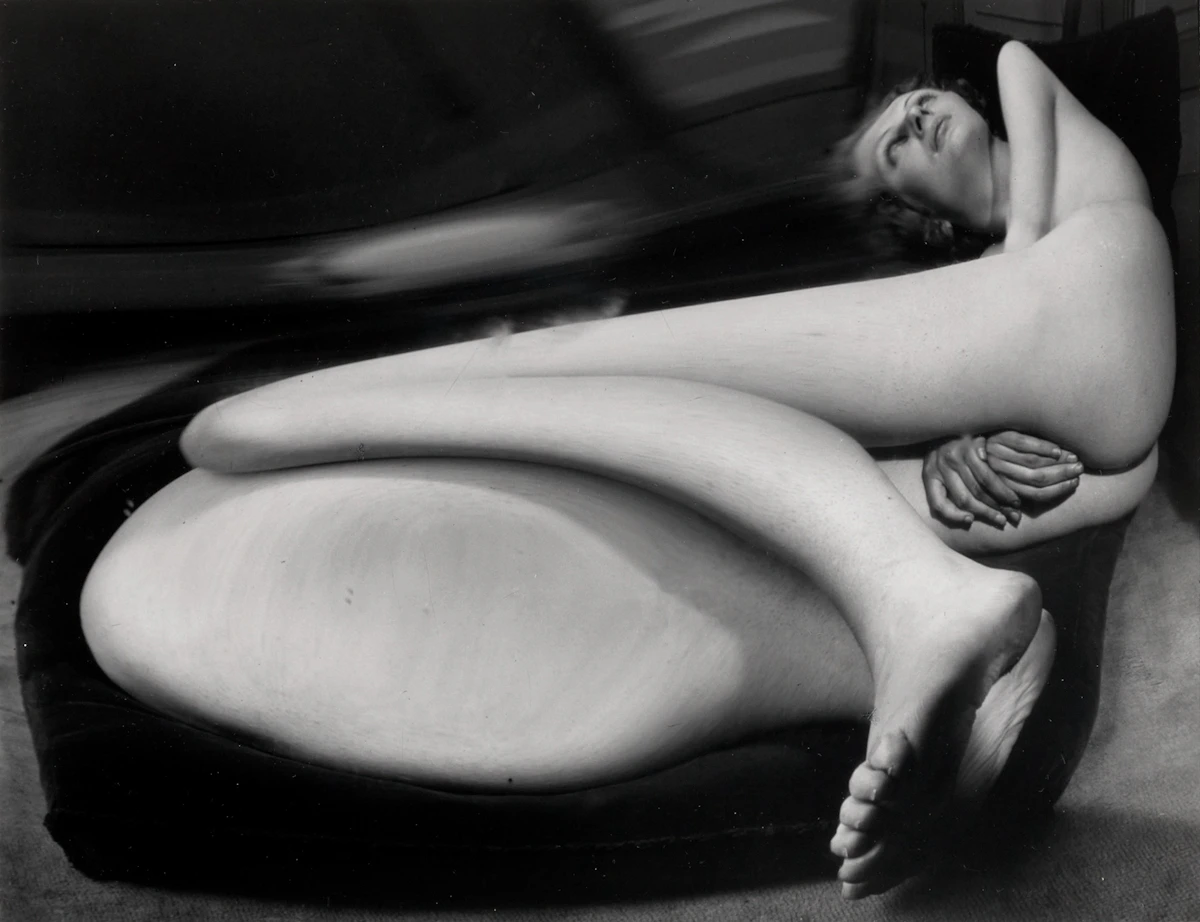
André Kertész was one of the most influential photographers of the twentieth century. Born in Budapest, Hungary, in 1894, he received his first camera at the age of 18 and began taking portraits of his friends and family. He was drafted in 1914 into the Austro-Hungarian army in World War I, in which he brought along his camera and captured the lives of the soldiers around him.
In 1925, Kertész moved to Paris, where he started a career as a photojournalist. He began taking photographs of the Paris streets, highlighting small, insignificant details of the environment around him, which led to his popularity as a photographer. Paris was also where he met and became friends with Alexander Calder, Constantin Brancusi, Marc Chagall, and Piet Mondrian. Kertész would later photograph these famous artists and other artists who lived and worked in Paris. Kertész then relocated to New York in 1936, where he was struck by the spectacle of the city. The photographs from this era demonstrate his fascination with New York and the feeling of isolation and alienation that he experienced in this new environment. For years, Kertész was unable to publish anything due to being considered an enemy of the government during World War II, and it was only in 1964 that his career began to flourish when John Sarkowski curated a solo show of his work at the MoMA in New York.
Kertész’s work has since been shown in several major exhibitions at institutions such as the Getty Museum in Los Angeles, The Art Institute of Chicago, The Photographers' Gallery in London, and Musée National d'Art Moderne du Centre Georges Pompidou in Paris.