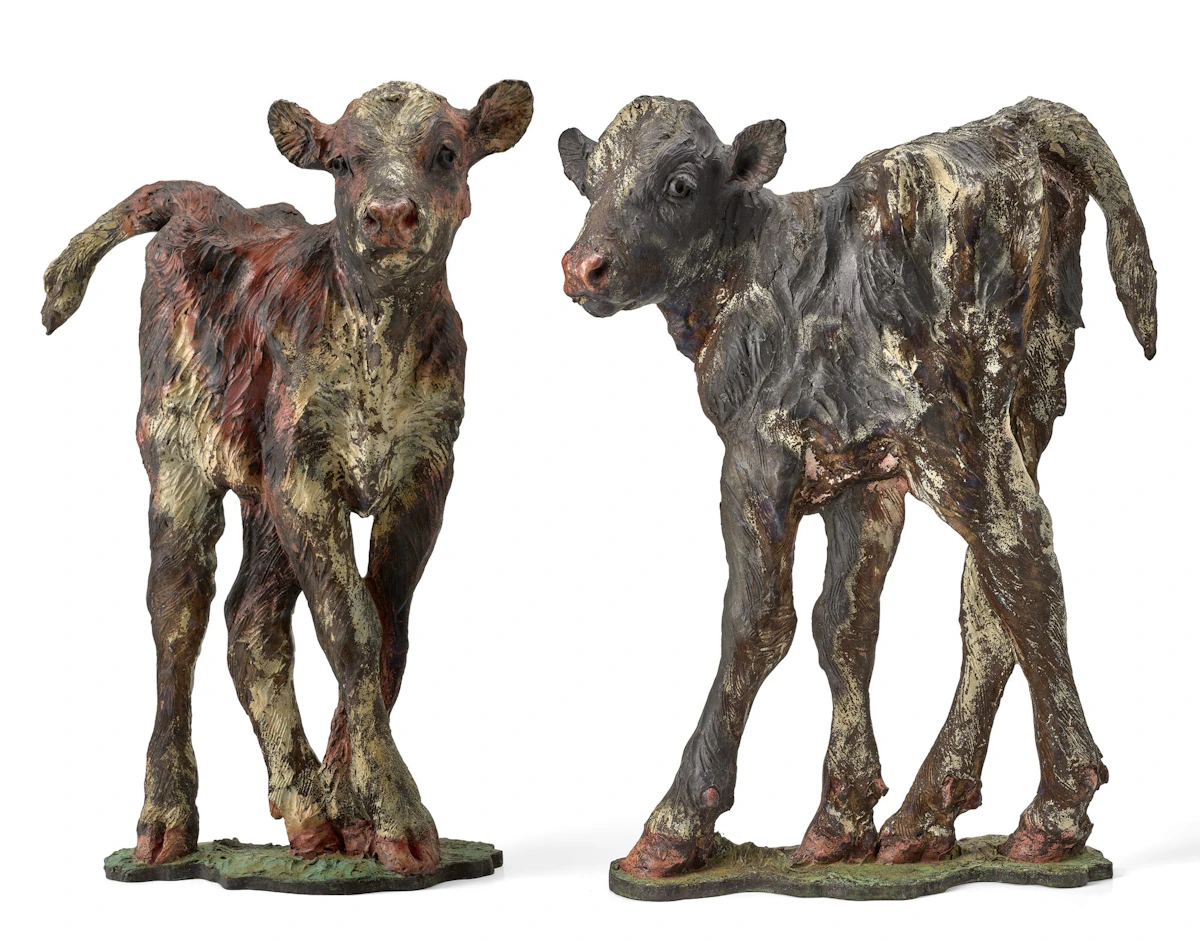
- Dragonfly: signed (incised), dated 1998 and numbered 4/7 on the base; 23 ins x 18 ins x 10 ins; 58.4 cms x 45.7 cms x 25.4 cms
- Papillon (Butterfly): signed (incised), dated 1998 and numbered 4/7 on the base; 22.5 ins x 15.75 ins x 10 ins; 57.1 cms x 40 cms x 25.4 cms
22.5 × 15.75 × 10 in (57.1 × 40.0 × 25.4 cm) (overall)
Douglas Udell Gallery, Edmonton
Bruce Saville, Edmonton
Terence Heath, Joe Fafard, Ottawa, 2007, pages 133-136
Joe Fafard grew up on a farm in Saskatchewan, where he developed a close familiarity with cattle and their individual characteristics. Rather than treating cows as generic farm animals, he approached them as distinct personalities, capturing their expressions, postures and quirks. Their names often reinforce this sense of individuality. The reliance on cows, not just to farm life, but to society at large, is a theme constantly explored by the artist.
Terence Heath points to Fafard's view of his subject, the cow existing not just as “part of farm life but also of the very basis of a settled society that could build cities and roads, pursue fixed economic and social programs and project a planned, sustainable life for large groups of people. The history and fate of the domesticated animal and the human are interlinked at the deepest of levels of survival and symbiotic development.” For Fafard, cows embodied the relationship between humans and animals, and naming each bronze sculpture reflected his respect for their individuality and personality. “Each animal has a presence; there are no generic animals; even the ones called simply Ayrshire are individuals.”
Bruce Saville was an entrepreneur and community leader, who made a lasting impact on the lives of Edmontonians across diverse fields, from high technology to sport. Saville was also a visionary supporter and philanthropist whose contributions to the University of Alberta helped shape its future.
