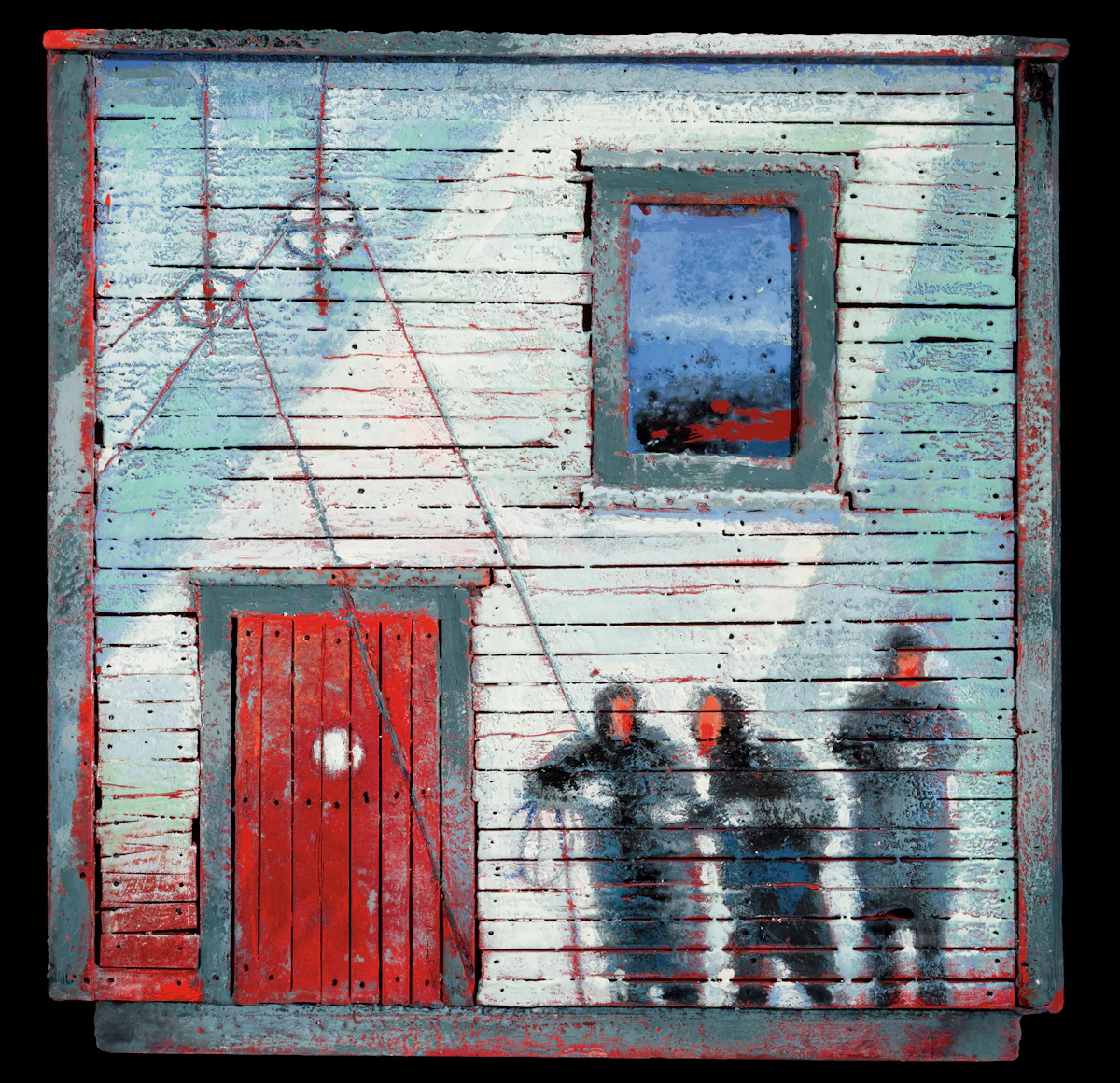
titled and dated 2013-2021 by the estate on the reverse; unframed
16 x 16 x 1.5 in (40.6 x 40.6 x 3.8 cm) (overall)
(including Buyer's Premium)
Estate of the Artist
Ken Forsyth, David Blackwood: Revelation, Toronto, 2013, page 18
Hailing from a family of fishermen, the expectation was that David Blackwood would follow in the footsteps of his father and grandfather, who were both sea captains. Given the isolated nature of the community where he grew up, the artist viewed it as a “miracle” that his artistic ambitions were embraced by those around him. Blackwood reflected on his past through his artwork, working largely from memory. The distance allowed him to pare back the narrative and create strong and cohesive images. It is Blackwood’s experience at sea that radiates from his work, delivering intensity and authenticity.
The encaustic paintings “demonstrate a level of observation and complexity, inventiveness and achievement”, writes Ken Forsyth. “They also show the lengths Blackwood will go to in deconstructing, analyzing and understanding his subject completely. These panels really operate more as carved and painted relief sculptures in which every detail, from the knot holes of the boards down to the screws in the hasps and hinges, is painstakingly carved and dowelled into place by the artist before the encaustic ground is applied. The density of colour, luminous effects, and shadow play across the surfaces of these works achieve a level of richness and verisimilitude that is without equal in Blackwood's work.”
This encaustic painting was a work in progress by David Blackwood, who fashioned paint pots by repurposing empty tuna or salmon tins with wooden handles. These pots filled with encaustic paint would then be heated up before applying the encaustic to the built wood panel Blackwood created.
