Albert Robson, "Cornelius Krieghoff", Toronto, 1937, pages 5-7
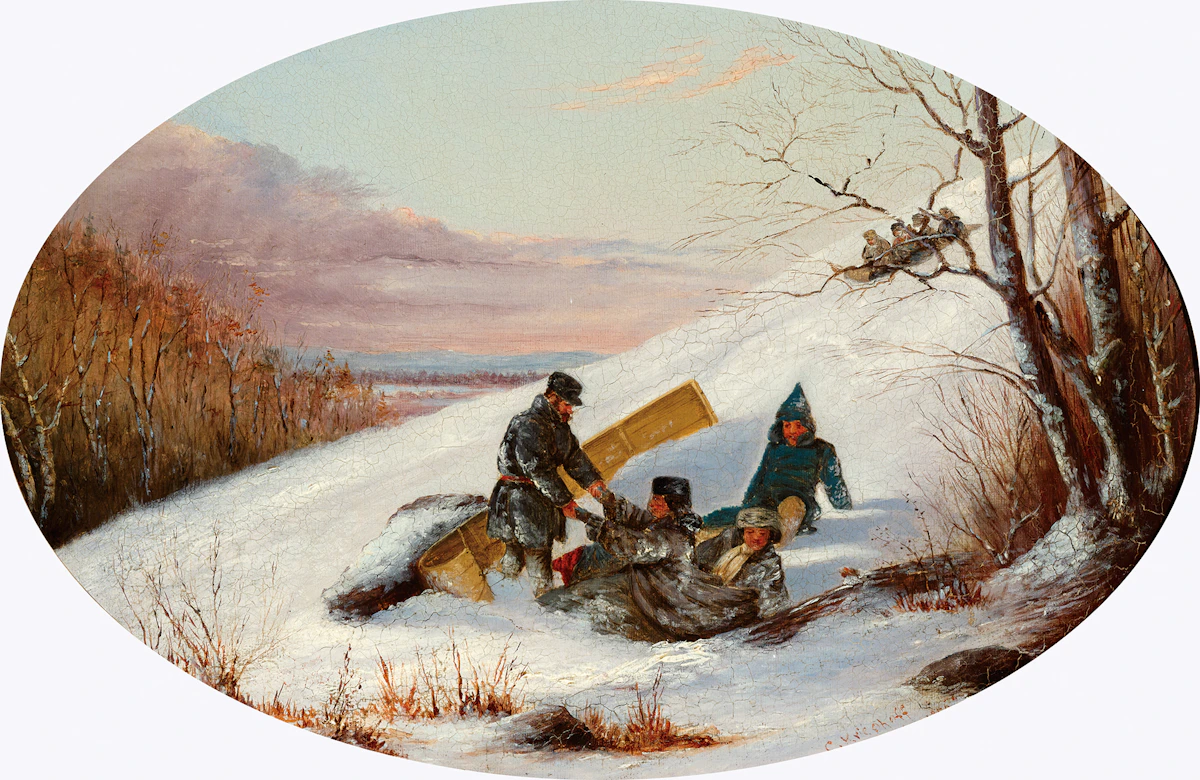
Hugues de Jouvancourt, "Cornelius Krieghoff", Toronto, 1971, reproduced page 60 as "Falling Down", 1855 (oil, 9 x 11 ins)
Hugues de Jouvancourt, "Krieghoff", Montreal, 1979, reproduced page 93 as "La Culbute", 1856 (9 x 11 ins)
Winter sports were popular in Quebec in the nineteenth century and were part of the social season in the cold, snowy months. These sports and pastimes included moose hunting, sleigh driving, snowshoeing and tobogganing. The habitant way of life in Quebec was unique and the artist found parallels, as well as a comfortable familiarity with his own native rural Dutch traditions.
Krieghoff often depicted the exuberant pleasures of pastimes in this period, such as the rowdier side of social life in the Merrymaking paintings. Albert Robson noted that it was in Quebec that Krieghoff “published his finest and most significant work” and that “without question, Krieghoff fell in love with French Canada and the Canadian people... His keen mind and fertile imagination enjoyed to the fullest the picturesque life of the habitant, the Canadian winters with sleighing and tobogganing. His wide-awake intelligence overlooked nothing of significance, and has left a valuable record of a picturesque people and a passing age.” Robson discusses the varied subjects that Krieghoff captured in his work and, although the painter created many depictions set in the autumn, “it was the snow-covered landscapes of winter, with the bright Quebec sleighs and the colourful costumes of the habitants, that he painted with the greater artistic success. He realized that winter was the most typical and picturesque season, as it was also the period of sleighing parties, snowshoeing and dances, and it was with these subjects that he reached his highest levels of excellence.”
"Falling Down" is a rarity, as it is both a lively, amusing scene and a depiction of a casual mishap. The figures are in a heap at the foot of the hill, finding merriment in the calamity of falling off the toboggan into the cold snow. This cheerful painting is a representation of innocent everyday fun and signifies the exhilarating pleasure of social winter activities. These playful winter scenes were a highly sought-after subject matter in this period and one the artist would return to often. They continue to be a coveted token of early Canadian art, culture and life.