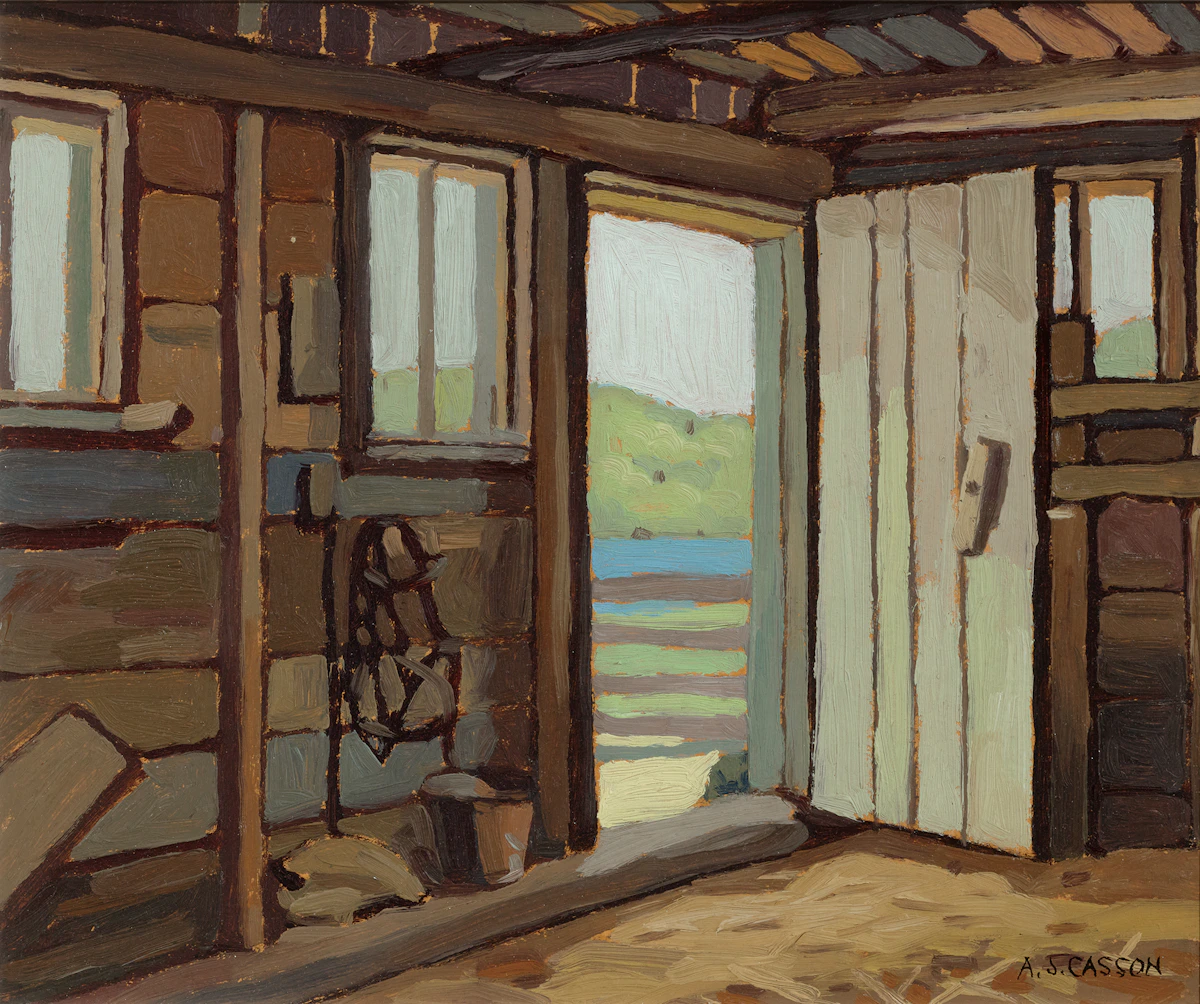
signed lower right; signed, titled and dated 1923 on the reverse
9.25 x 11.25 in (23.5 x 28.6 cm)
Auction Estimate:$25,000 - $35,000
Sale date:May 30, 2024
Price Realized
$27,600
(including Buyer's Premium)
Provenance
Roberts Gallery, Toronto
Private Collection, Toronto
Alfred Joseph Casson lived most of his life in Toronto where he was born in 1898. His first experience of small town Ontario was in childhood; he would make frequent visits to Meadowvale, a village west of Toronto, where he had family ties. Here, and later in Guelph, he developed a taste for rural life. After studying in Toronto with artists J.W. Beatty and Harry Britton, Casson began an apprenticeship in the commercial art firm of Rous and Mann under Franklin Carmichael in 1919. Carmichael, a member of the Group of Seven from its inception in 1920, was an important influence on the younger Casson, taking him on sketching trips and introducing him to other Group members. It was Carmichael who invited Casson to join the Group of Seven in 1926 to replace Frank Johnston who had left in 1922. During the 1920s, Casson was travelling throughout Ontario sketching and painting the rural towns, such as this painting entitled “Barn Interior, Lake Kashagawigamog” in Haliburton County. He later explained that this subject matter had given him the distinct identity he sought within the Group, as did his penchant for painting in watercolour. His legacy, he believed, was a body of work that recorded for posterity the rapidly disappearing rural towns of Ontario, just as A.Y. Jackson had done in Québec.