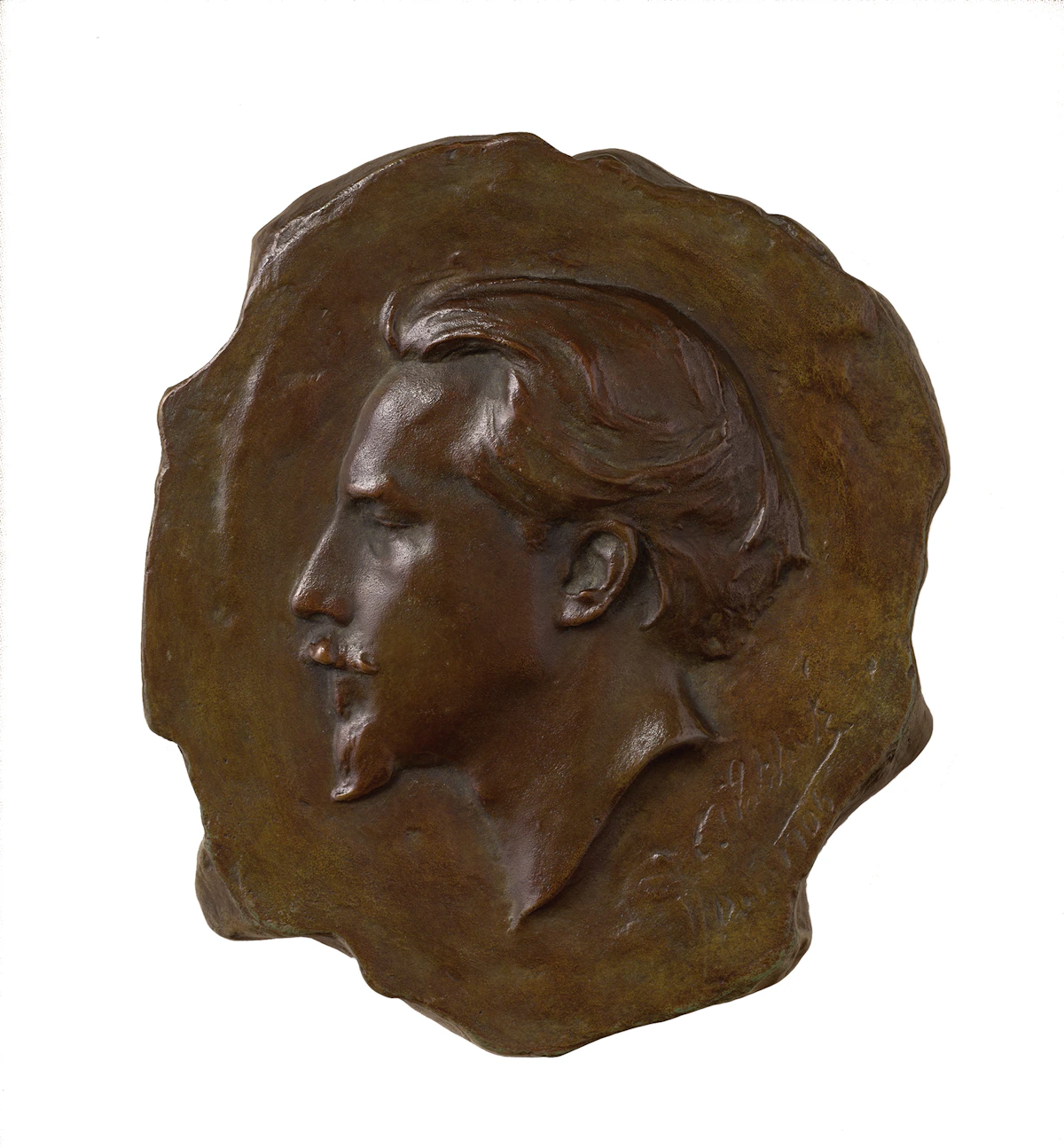
8.75 x 7.5 x 0.75 in (22.2 x 19.1 x 1.9 cm) (overall )
Auction Estimate:$2,500 - $3,500
Sale date:December 6, 2023
Price Realized
$2,400
(including Buyer's Premium)
Provenance
Private Collection, Montreal
Private Collection
Literature
Nicole Cloutier, “Alfred Laliberté, Pensées et Réflexions”, Quebec City, 1990, unpaginated, reproduced
The son of a farmer and having the intention of working in the family business, Alfred Laliberté began sculpting as a hobby at the age of fifteen. His work drew the attention of the Honourable Wilfrid Laurier who encouraged him to enter the Conseil des arts et manufactures (CAM) in Montreal. It was largely through Laurier's attention that Laliberté earned his father's approval to enter the CAM in 1896. In 1888, at the young age of twenty, he won first prize at the Québec City Provincial Exhibition for his life size bust of Laurier.
In 1902, the Council funded Laliberté’s studies at the École nationale supérieure des beaux-arts in Paris. It was there he first saw the work of Auguste Rodin, whose influence would profoundly mark his allegorical and religious work. While in Paris, he became friends with fellow Québecois artist Marc-Aurèle de Foy Suzor-Coté. Laliberté produced this intricate bronze medallion portrait of his compatriot in 1906 while in Paris, before returning to Quebec the following year. The sculptor would go on to produce several other depictions of Suzor-Coté throughout his life.