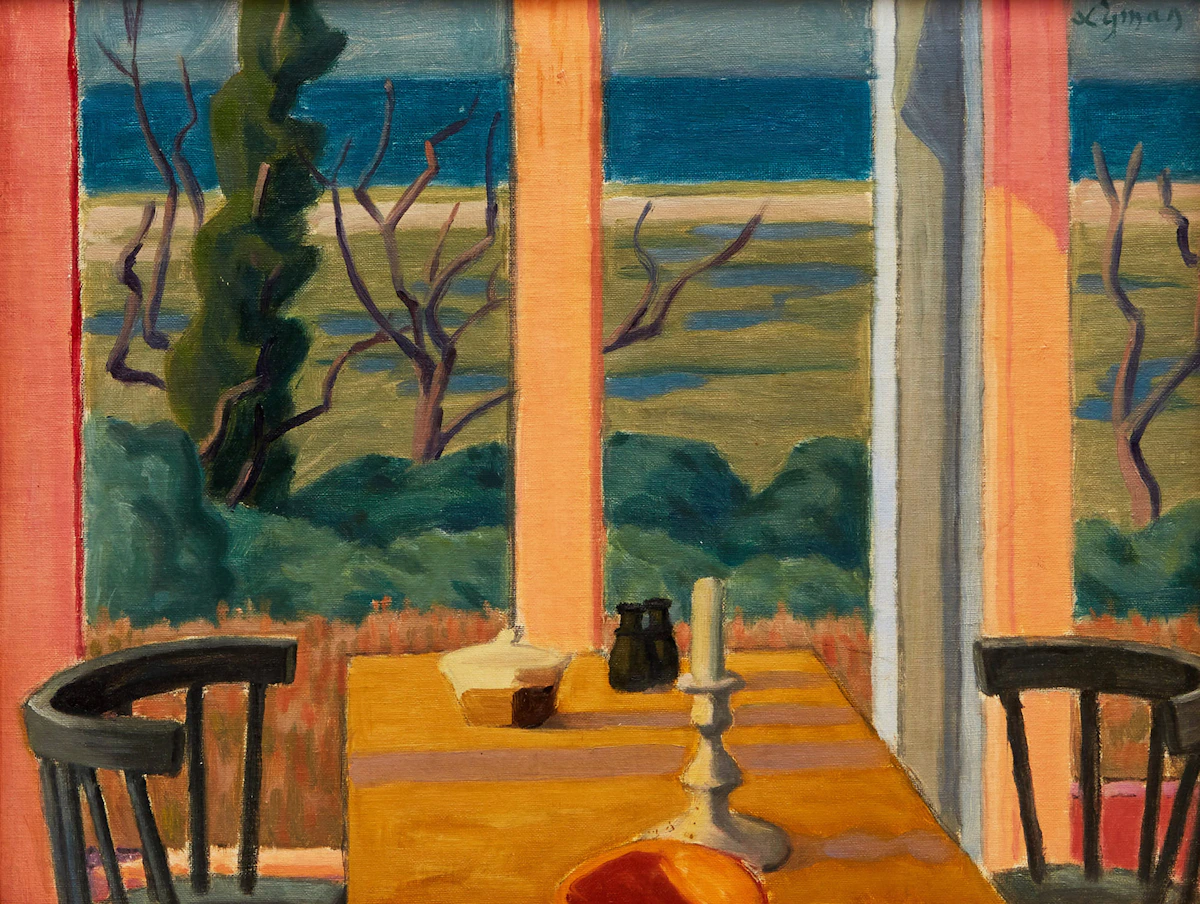
signed upper right; titled on the gallery label on the reverse
14 × 18 in (35.6 × 45.7 cm)
Auction Estimate:$6,000 - $8,000
Sale date:May 17 - 31, 2022
Price Realized
$13,200
(including Buyer's Premium)
Provenance
Dominion Gallery, Montreal
Private Collection, Ontario
Literature
Lucie Dorais, Richard Foisy, François-Marc Gagnon, et al, “Morrice and Lyman, in the Company of Matisse”, McMichael Canadian Art Collection, Kleinberg, 2014-2015, pages 18, 24 and 58
Born into an affluent Montreal family, John Lyman was a social man who travelled extensively. It was on these travels that he encountered James Wilson Morrice and Henri Matisse. Matisse, Morrice and Lyman spent a total of four and a half months together, but the impact of their meeting reverberated through generations of Canadian artists to come. Of the three artists, Lyman made the most detailed accounts of their association, but it is in their artwork that we see the greatest evidence of their meeting. The emphasis on creative authenticity and the shared view of ‘colour-light’ or the desire to unearth the essential form that Lyman wrote is “below the surface, beyond appearances…permanent and durable” was the thread that bound them.
Lyman’s travels through Europe and his visit to the Some French Impressionists exhibition made a lasting impression on the artist and he wondered at “the treatment of light, this extraordinary quality of light” that exuded from the works of Monet, Renoir, Sisley or Pissarro. Light was a primary concern of for these artists, and they inspired Lyman to create vibrantly coloured pictures that sought to capture its various colours and textures. North America offered Bermuda and the islands of the Caribbean as a foundation for Lyman’s expression of light through colour. His frequent travels to these islands and eventual emigration to Barbados are reflected in his palette. The pinks of Bermuda’s beaches and buildings are reflected in Lyman’s work, and we see the same hues employed in the window frame of this picture, the shadows cast across the table and the sand beach beyond. As Lyman stated, “Light is everything. It is what reveals to us shapes and their colours. I am not a fan of outdoor painting and the ‘effects’ of light do not interest me. What attracts me is the quality of the colour determined by the light. The greatest joy in painting is to find light through colour. My fondness for Fauvism is entirely rooted in this.”