Acquired directly from the artist (1964)
By descent to the current Private Collection, Ontario
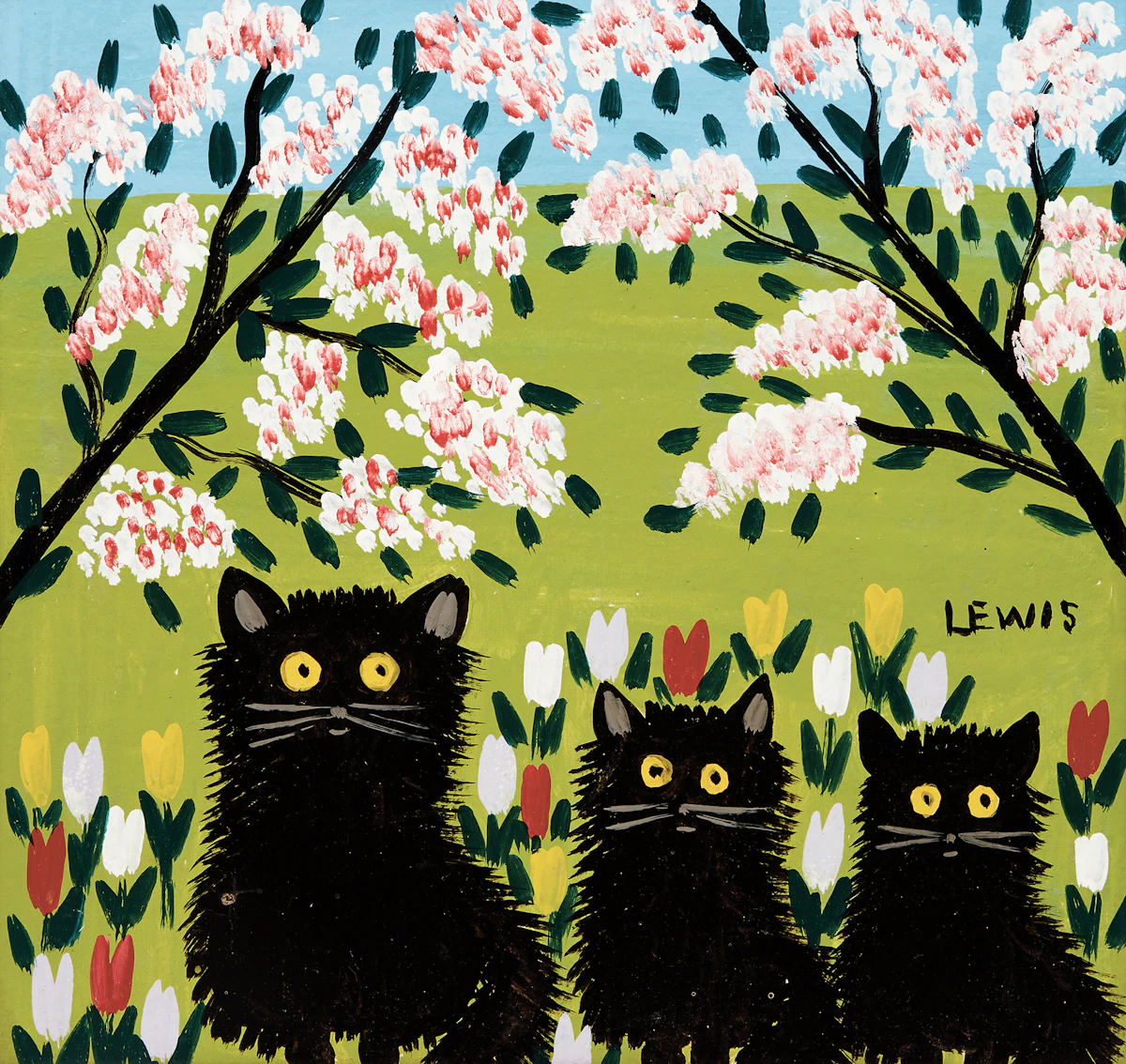
The 1960s marked the most profitable period of Maud Lewis’ career. It was in 1964 that the Premier of Nova Scotia, Robert L. Stanfield, visited the artist and paid $6 for two of her paintings. One of the paintings was featured on the Premier’s Christmas card that year. In 1963, the Alms House of the Poor Farm closed its doors. Maud’s husband, Everett Lewis, was nightwatchman and a former inmate of the Poor Farm. The artist’s rise in popularity came just in time for the couple. With the closure of the Poor Farm, the picture business became their sole source of income. Everett salvaged many items from the institution, including tins of red, white and green house paint. It seems likely that these tins of paint were then used not only to paint the Lewis’ House, but also to paint the pictures sold at their roadside business. As finances were tight in the Lewis household, it is unlikely that the paint went unused. The colours were versatile: white and red could be turned into pink, and green and red became brown. As we see in “Three Black Cats,” these colours formed a major part of Maud Lewis’ palette.
“Three Black Cats” is a classic Maud Lewis motif. She repeated her subjects and scenes from memory, and cats and flowers ranked among the artist’s favourite subjects. Three startled black cats stare directly at the viewer. They are framed by a cascade of cherry blossoms and a riot of colourful tulips. The intention was to delight the viewer and humour was a hallmark of her style.