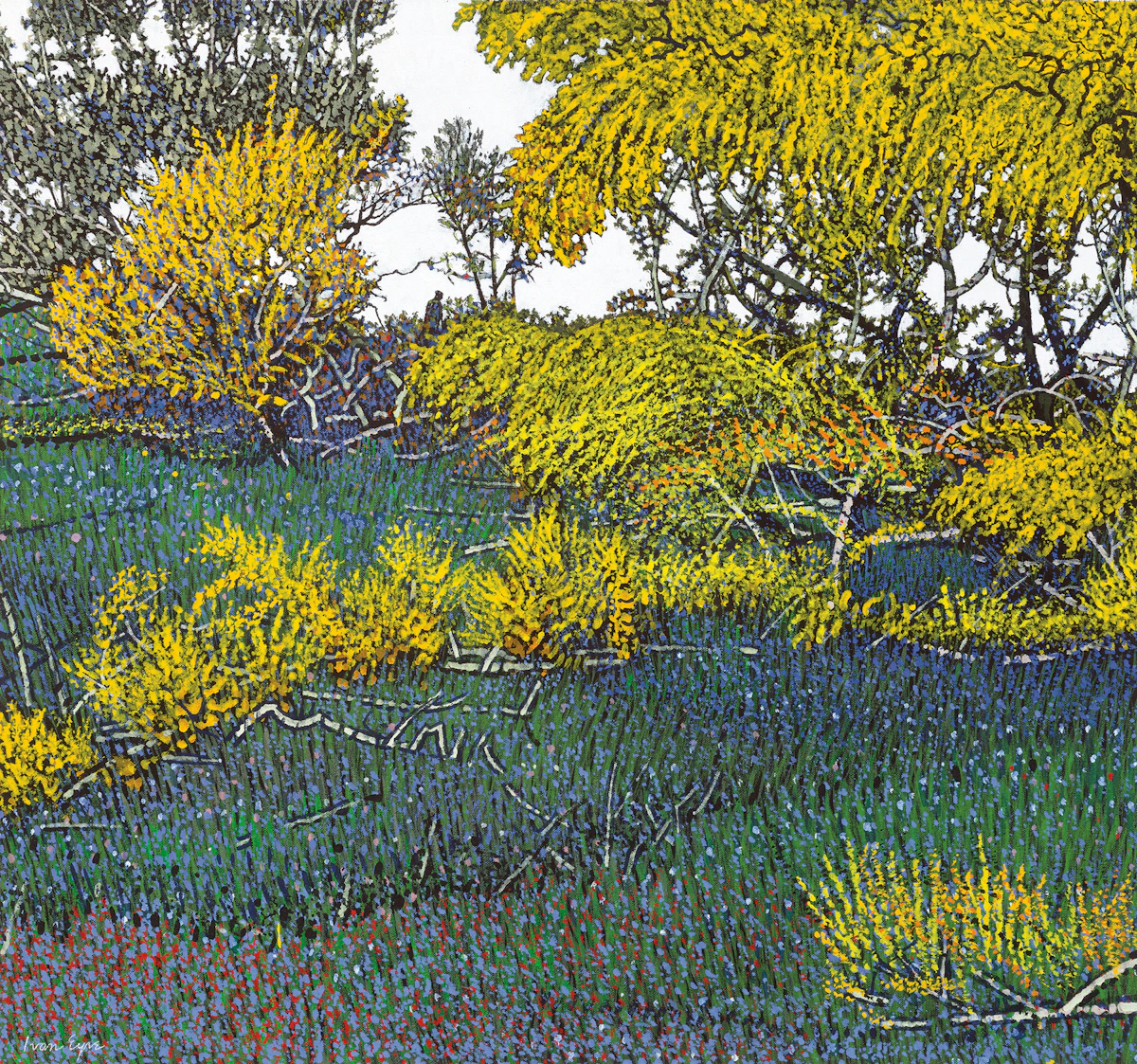
signed lower left; titled and dated 1998 on the stretcher
28 x 30 in (71.1 x 76.2 cm)
Auction Estimate:$60,000 - $90,000
Sale date:June 15, 2022
Price Realized
Price on request
(including Buyer's Premium)
Provenance
Private Collection, Winnipeg
Literature
Pavillion Gallery, “Ivan Eyre: The Paintings”, Assiniboine Park, Winnipeg, 2004, pages 18-19
George Woodcock, “Ivan Eyre”, Don Mills, Toronto, 1981, page 110
Born in Tullymet, Saskatchewan in 1935, and completing his studies at the University of Saskatchewan and the University of Manitoba, the artist was heavily influenced by the Canadian prairie landscape. In 1969, Eyre began renting a large room in the old warehouse district of Winnipeg. The view of the western city sky through the large windows of his studio became a vital component in many of his compositions. The practice of landscape painting has continued throughout the artist’s career with the Saskatchewan and Manitoba setting figuring prominently as works of imagination, an ode to the artist’s personal history. Eyre comments on the landscape genre of painting: “The subject is inexhaustible. Infinite possibilities exist. It’s still possible to make of a landscape a very personal statement, even a radical one, different from anything previous.”
Interestingly, Eyre notes that these landscapes are never done on location and does not proclaim the scenes or even perspectives to be realistic. “West Yellow Rough” and his other lush landscapes of riverbanks, fields and mountains are instead generated to induce associations of home and familiarity. In this large painting, the viewer is drawn to the crisp yellow leaves on the trees. Upon closer inspection, it appears that many branches have fallen or been cut down. The yellow leaves, suggestive of the fall season, contrast with a lush and blooming garden, creating a pleasing, though subtly unrealistic setting.
This theme of imagined landscapes began in the 1970s and continues to appear in his work to this day. “West Yellow Rough” is known as one of Eyre’s ‘pure’ landscapes, referring to the absence of any human presence. Author George Woodcock describes the artist’s process in creating these fictional settings: “Indeed, the imaginative authenticity of Eyre’s landscapes is in fact guaranteed by his refusal to work with either photographs or sketches made on the spot. Memories are more malleable, more subject to formal demands than such notations, and Eyre adapts and changes them at will, but always so that there is a movement and a tension in the picture.”