signed with initials lower right; titled on a label on the reverse
9.25 × 6.5 in (23.5 × 16.5 cm)
Auction Estimate:$20,000 - $30,000
Sale date:September 24, 2020
Price Realized
$19,200
(including Buyer's Premium)
Provenance
Galerie Walter Klinkhoff, Montreal
Galerie Valentin, Montreal
Private Collection, Montreal
Literature
J. Russell Harper, “Krieghoff,” Toronto, 1979, pages 59 and 129
Dennis Reid, “Krieghoff, Images of Canada”, Toronto, 1999, pages 232-33
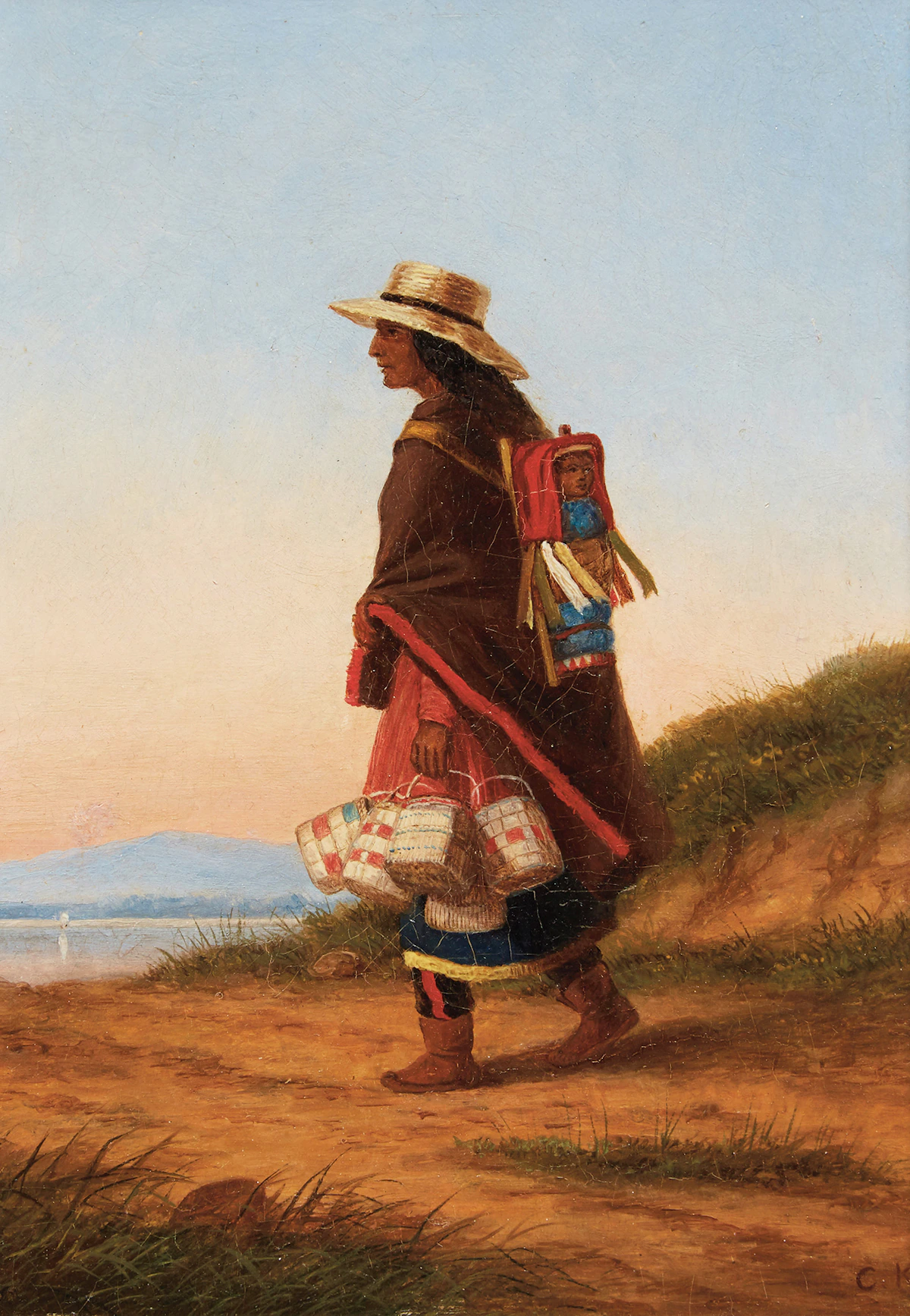
Cornelius Krieghoff’s images of Canada’s Indigenous People are some of his most acclaimed works. Depictions of the Indigenous population he encountered make up approximately one-third of the artist’s known body of work. Krieghoff often portrayed this subject in an idealistic manner, depicting man’s relationship with nature. Writing of Krieghoff’s time in Quebec City between 1853 and 1863, Harper shares that these years were the artist’s “happiest and most productive”, with an abundance of subjects for his canvases. With Hurons living northwest of Quebec in the village of Lorette, Krieghoff continued to “paint small canvases of single Indian figures. Women in blankets wander up hills laden with great festoons of baskets, or carry cradle boards as they pick their way through craggy mounds of ice cakes crossing the St. Lawrence in front of the city. They are reminiscent of the women in the Montreal streets, but are infinitely more appealing as a result of increased detail and unsurpassed craftsmanship... These canvases were often dashed off with incredible rapidity when finances were low, but on other occasions the artist threw his heart into the work, painting single figures with care, pride of workmanship, and a more acute artistic sensibility.”
Attention to fine detail is paid in this artwork in a celebration of the craftsmanship and beauty of the basket maker’s craft. Fine woven patterns are highlighted in the bundle of baskets, all unique in their weave of red and blue pigmented birch strips, carefully woven by their maker for sale and trade with European settlers. The infant carried by the mother in its colourful cradle board signals the cultural traditions within Indigenous communities, something Krieghoff was particularly interested in recording and presenting to his audience of collectors.