Iris Nowell, Painters Eleven: The Wild Ones of Canadian Art, Vancouver/Toronto, 2010, page 75
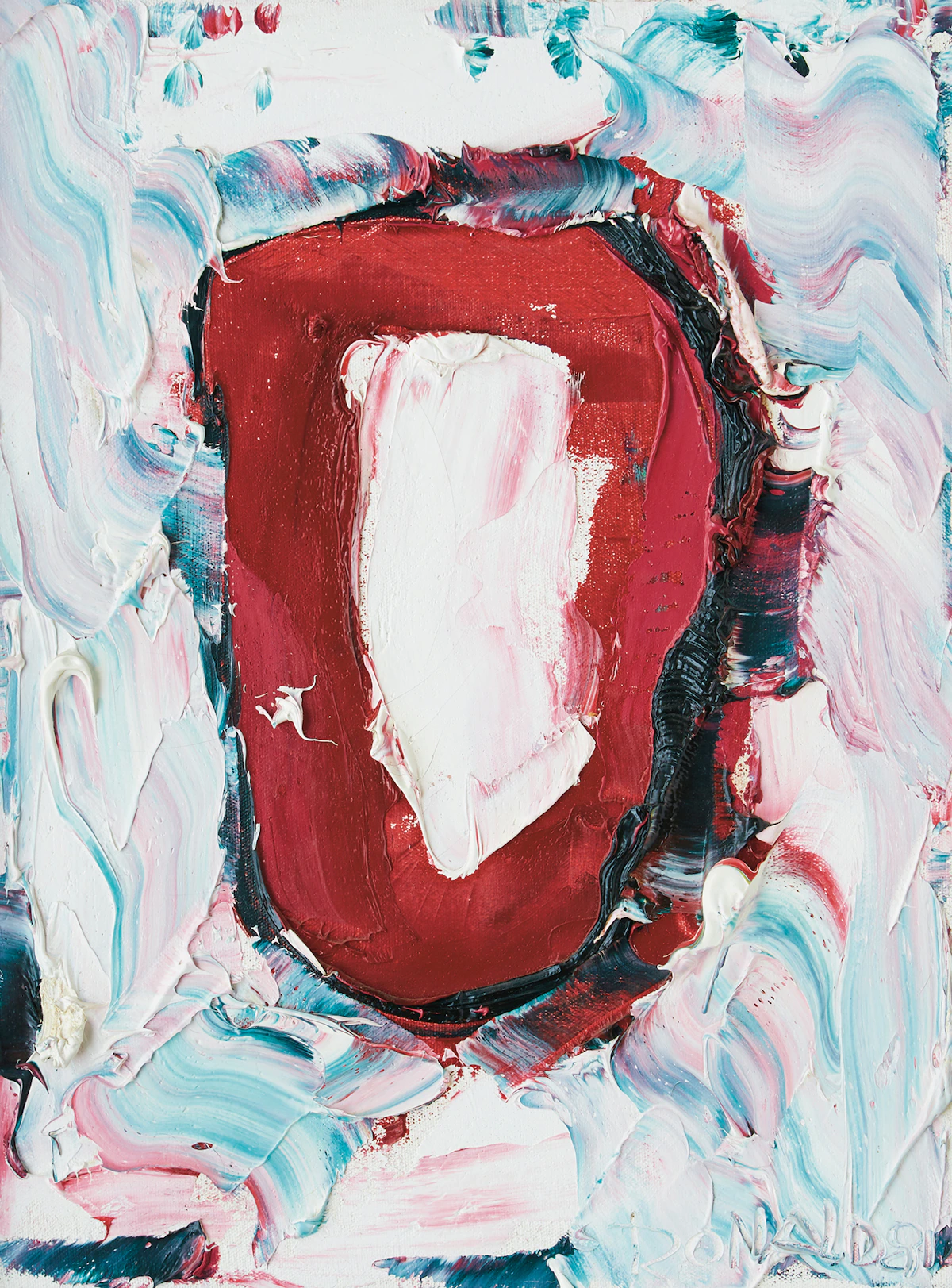
Prolific Canadian abstract painter William Ronald was the youngest member of the Painters Eleven. His studies of the Abstract Expressionists in New York in the 1950s left a long-lasting influence on Ronald’s work into the 1980s and 1990s. A vibrant example of William Ronald’s mature period of work, “Abstraction” showcases the artist’s love of energetic colour and thick and aggressive brushstrokes, which suggest the violent expression of the New York School. Executed in frenetic splashes of striated black, white, crimson, and contrasting green pigment, the work is charged with movement and a dark intensity. Scraping into the canvas in a circular motion with deep red paint bordered by black impasto, Ronald draws the viewer’s eyes into the centre of the composition, where pinks and whites lap playfully at the central oval-shaped form. As the artist progressed in his career, his application of paint took on a more spirited approach with splashes of paint flicked and ground into the canvas, and daubs of errant pigment peppering the central image layer. With its whirling electric energy, this work seems to emulate the artist’s own uniquely provocative personality. On his later works, Ronald notes: “Now I’m creating the best work I’ve ever done. I know what I am doing.” Rather than feel in a state of development and flux, Ronald attests to his self-actualization as an artist in these later abstract works.