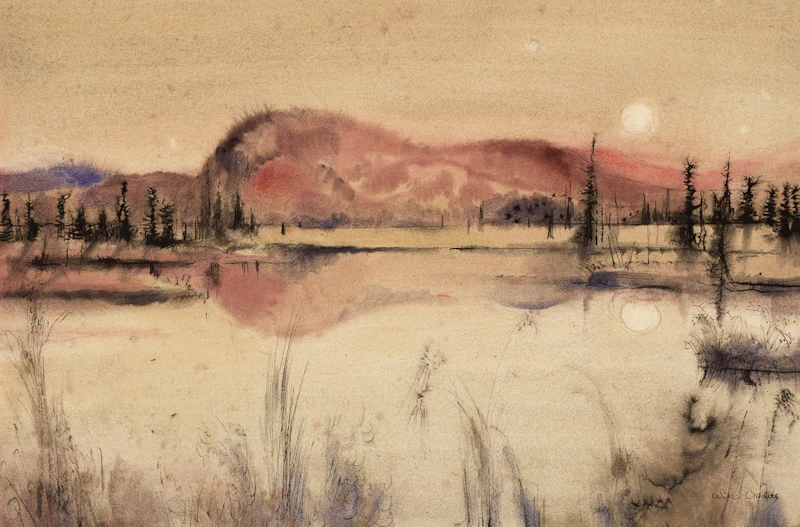
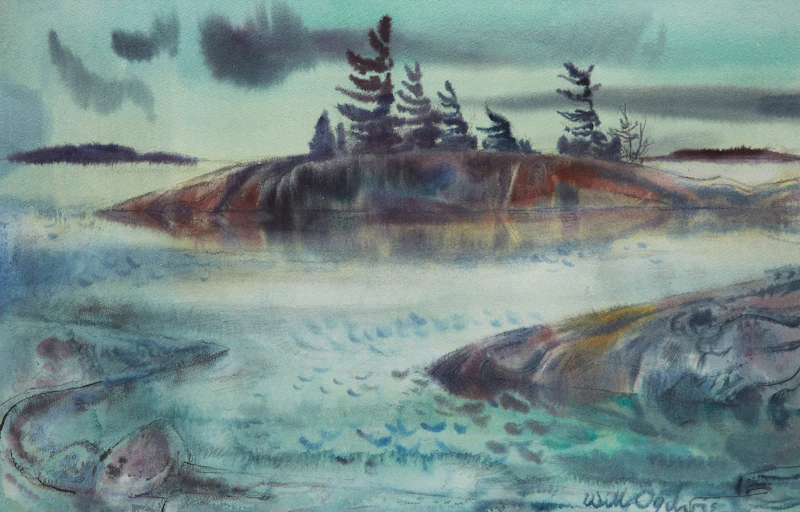
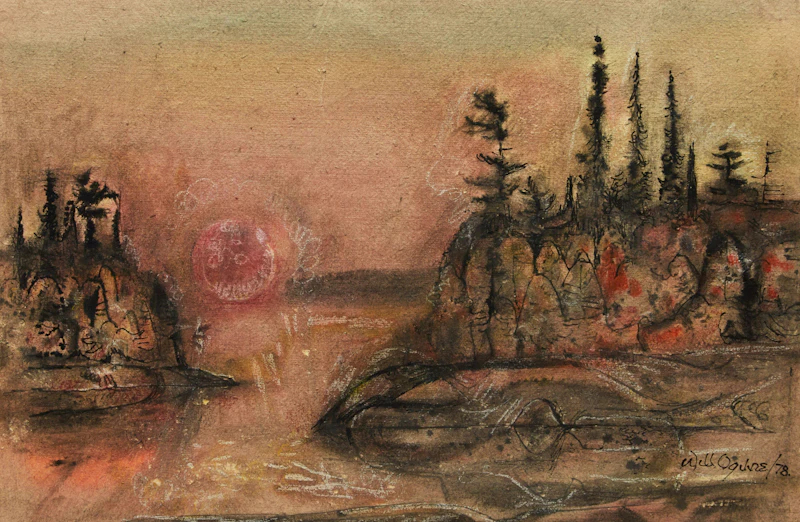
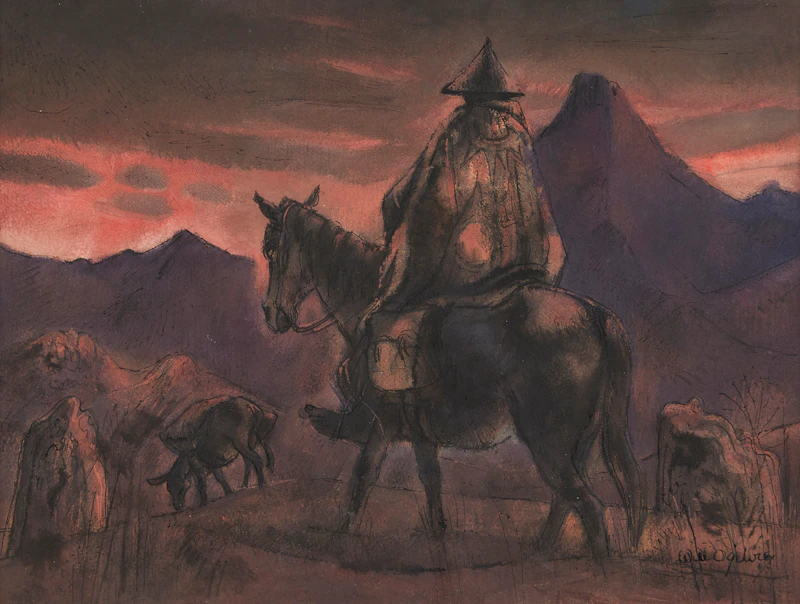
Will Ogilvie arrived in Canada in 1925 and initially settled in Toronto. He then moved to New York from 1925 to 1930 to pursue his studies at the Art Students League under Kimon Nicolaïdes, who would later author the influential drawing guide, The Natural Way to Draw (1941). After a brief stint as a commercial artist in New York, Ogilvie returned to Toronto and collaborated with Charles Comfort and Harold Ayres in a venture that combined advertising with magazine illustration. In 1933, he co-founded the Canadian Group of Painters and was an active member of the Canadian Society of Painters in Water Colour from 1933 until 1989. Notably, in 1936, he created murals for the Chapel of Hart House at the University of Toronto. After gaining experience at the Art Association of Montreal, Ogilvie enlisted in the Canadian army in 1940. He was appointed as the first Official War Artist in 1942. During his service with the 1st Canadian Division, he produced significant artwork in active war zones, often while under fire. From 1943 onwards, he worked in Sicily, mainland Italy, and Northwest Europe, creating memorable paintings of the devastated landscapes in Caen, the Falaise Gap, and the plight of refugees.